
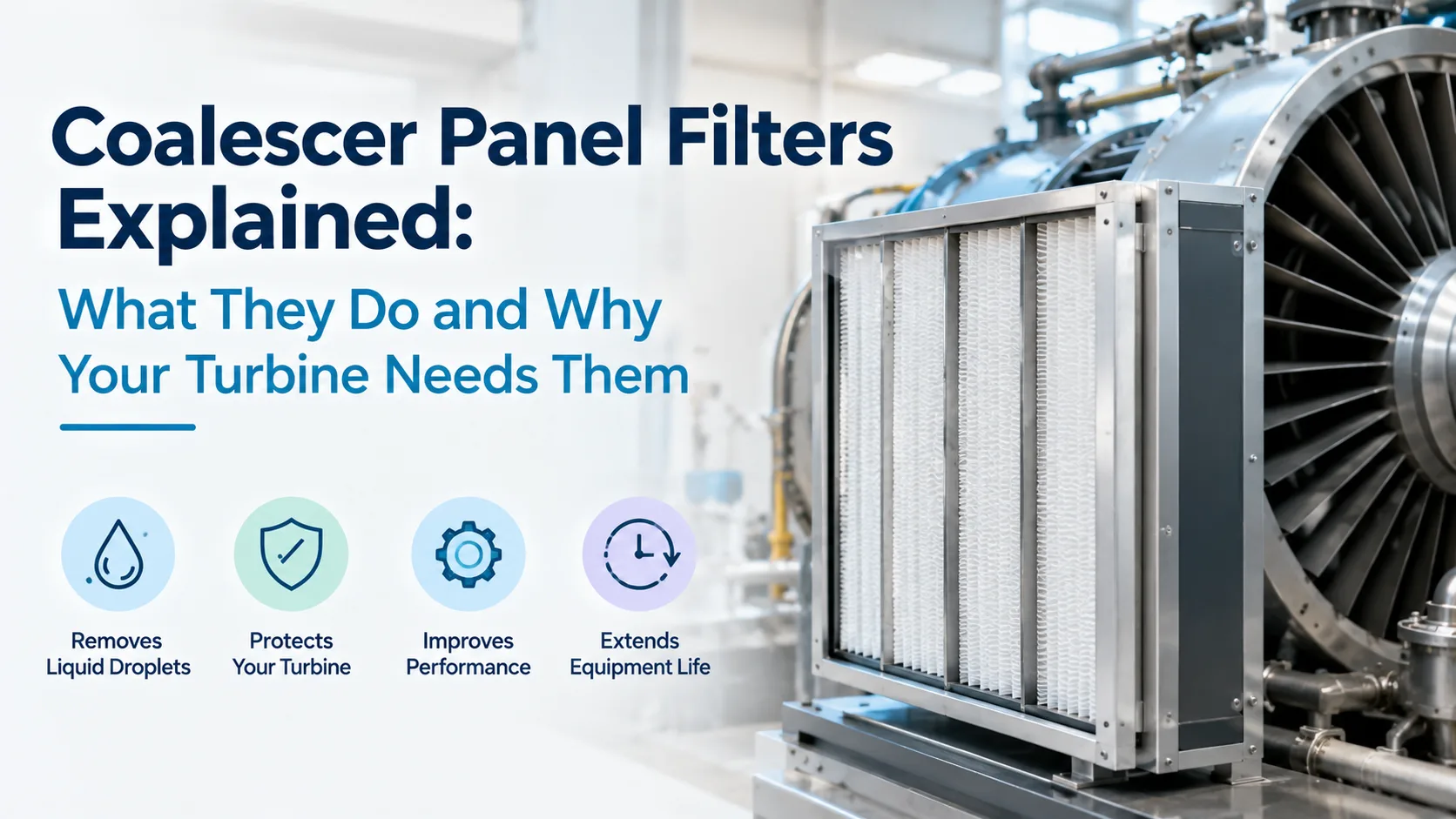
What Is a Coalescer Panel Filter?
A coalescer panel filter pulls tiny liquid droplets out of the air. Think of fog or sea spray. These droplets are too small to see on their own. But a coalescer filter forces them together into bigger drops. Once the drops are big enough, gravity pulls them down. They drain away instead of passing through into your turbine.
This matters because moisture is often the hidden cause of bigger problems. Dry dust alone usually blows straight through a filter system. But wet dust sticks. It builds up on compressor blades. Over time, this buildup - called fouling - reduces power output and raises fuel use.
A good coalescer stops that problem before it starts.
How a Coalescer Panel Filter Works
The process is simple to picture, even though the engineering behind it is precise.
Air enters the filter: It carries fine mist, sea spray, or oil vapor.
The media captures small droplets: Special fibers inside the filter catch tiny drops as air passes through.
Droplets merge into bigger ones: This is the "coalescing" part - small drops combine into larger drops.
Gravity takes over: The bigger drops become too heavy to stay airborne. They fall and drain out of the housing.
Clean, drier air moves on: The air continues to the next filter stage, now free of most liquid contamination.
This is why coalescer filters use hydrophobic media. That means the fibers repel water instead of soaking it up. A filter that absorbs water instead of draining it will saturate fast and stop working.
Where Coalescer Panels Fit in a Gas Turbine Filter System
Most gas turbine intake systems use three main filter stages. Each stage has a different job.
Stage 1: Coarse Pre-Filter
This stage catches large debris. Think dust, insects, and bigger particles. It protects the filters behind it from getting clogged too fast.
Stage 2: Coalescer Panel Filter
This is the stage we're covering here. It removes moisture, salt mist, and oil droplets. This step protects the fine final filter from getting soaked and losing efficiency.
Stage 3: High-Efficiency Final Filter
This stage catches the smallest dust particles left in the air. It's the last line of defense before air reaches the compressor.
If Stage 2 is missing or weak, Stage 3 gets overwhelmed fast. Moisture reaches the fine filter and reduces its life. Worse, moisture can reach the compressor itself and combine with any remaining dust. That's when fouling starts.
Coalescer Panel Filters vs. Other Filter Types
Engineers often ask how a coalescer panel compares to a standard panel filter or a fine pocket filter. Here's a simple side-by-side.
Feature | Coalescer Panel Filter | Standard Panel Filter | High-Efficiency Pocket Filter |
Main job | Remove moisture, salt, oil mist | Remove coarse dust and debris | Remove fine dust particles |
Media type | Hydrophobic (water-repelling) media | Standard synthetic or glass fiber | Fine synthetic or glass microfiber |
Where it sits | Middle stage | First stage | Final stage |
Best for | Coastal, marine, offshore sites | All sites, as first protection | All sites, final air quality |
Key risk if skipped | Moisture reaches compressor, causes fouling | Debris clogs downstream filters fast | Fine dust reaches compressor |
Each stage does a different job. None of them can replace the other. A site missing the coalescer stage is often the one calling about unexplained fouling a few months later.
How to Choose the Right Coalescer Panel Filter
Not every coalescer filter is built the same way. Here's what to check before you order.
1. Match It to Your Site Conditions
Coastal and offshore sites need strong salt-mist protection. Industrial sites near process plants need media rated for oil mist. Humid sites need a filter that drains fast and doesn't saturate.
2. Check the Coalescing Efficiency
This tells you how well the filter merges and removes droplets. A higher efficiency rating means less moisture gets through to the next stage.
3. Check the Frame and Housing Material
Salt air and constant moisture wear down cheap frames fast. Look for corrosion-resistant materials like stainless steel or treated aluminum.
4. Confirm the Fit
A coalescer panel has to match your housing exactly. A loose fit lets air bypass the filter completely, which means the filter does nothing where the gap is.
5. Ask About Pressure Drop
A good coalescer filter should have a low pressure drop. A high pressure drop means the fans in your system work harder, which raises energy costs.
Where Coalescer Panel Filters Are Used Most
Coalescer panel filters show up across many industries, but a few sectors depend on them more than others.
Power Generation
Land-based power plants run turbines for thousands of hours a year. Even small moisture-related losses add up fast at that scale. A strong coalescer stage keeps output steady and reduces unplanned maintenance.
Marine and Offshore
This is where coalescer filters matter most. Sea spray puts constant moisture and salt into the intake air. Without a strong coalescer stage, salt deposits build up fast and corrode components far beyond just the compressor blades.
Oil and Gas
Process plants and refineries often release oil mist and hydrocarbon vapor into the surrounding air. Coalescer filters rated for oil aerosol protect turbines running near this kind of activity.
Industrial and HVAC Systems
Even outside gas turbines, coalescer-style filtration is used in compressed air systems and industrial ventilation to protect equipment from oil and moisture damage.
Common Mistakes When Specifying Coalescer Filters
Even experienced teams get this stage wrong sometimes. Here are the mistakes we see most often.
Matching dimensions only. A filter that fits the housing but uses the wrong media won't stop moisture properly. Size is not the same as performance.
Reordering without reviewing site changes. If a new industrial plant opened nearby, or the site moved locations, the old specification may no longer fit the new contaminant profile.
Skipping the coalescer stage entirely. Some older or budget filter systems only use a coarse filter and a fine filter. This leaves a big gap for moisture and salt to get through untouched.
Ignoring pressure drop over time. A coalescer filter that's saturated will show a rising pressure drop. Waiting too long to replace it puts extra strain on the fan system and lets more moisture through.
Choosing the cheapest media available. Low-cost media often lacks a proper hydrophobic coating. It may look similar on paper but perform very differently in real conditions.
Avoiding these mistakes is usually simple. It just takes checking the full specification, not just the part number, every time a filter is reordered.
Maintenance Tips for Coalescer Panel Filters
A coalescer filter doesn't need constant attention, but a few habits go a long way.
Check pressure drop regularly: A steady rise over time is the clearest sign the filter needs replacing soon.
Inspect for visible saturation: If water is pooling or dripping past the housing, the filter may already be overloaded.
Keep drainage paths clear: Coalescer filters rely on gravity to remove collected liquid. A blocked drain undoes the filter's main job.
Log replacement dates: Tracking service life across housings helps you catch problems before they cause fouling downstream.
Review the specification yearly: Site conditions change. What worked five years ago may not be the right match today.
Signs Your Coalescer Filter Needs Attention
Increased moisture visible in the filter house or downstream ducting
Faster-than-normal clogging of your final-stage filters
A rise in compressor washing frequency
Salt or oil residue building up past the coalescer stage
Power output slowly dropping with no clear cause
If two or more of these sound familiar, it's worth checking your current coalescer specification.
Why Choose Airguard Envirocare for Coalescer Panel Filters
Airguard Envirocare has manufactured intake filtration since 1985. Every coalescer panel filter is built under ISO 9001-certified production, using hydrophobic media matched to your site's exact contaminant profile. Our engineering team checks your current part number or housing dimensions against decades of build records, so you get a verified match, not just a similar-looking product. That means fewer surprises after installation and consistent protection for every filter stage that follows.
Key Takeaways
Coalescer panel filters remove moisture, salt mist, and oil droplets from turbine intake air.
They sit between the coarse pre-filter and the fine final filter in a three-stage system.
Hydrophobic media is what makes coalescing work - it repels water instead of soaking it up.
Skipping or under-specifying this stage is a common, hidden cause of compressor fouling.
Coastal, offshore, and industrial sites all have different coalescer needs.
A correct fit and low pressure drop matter as much as the media itself.
Conclusion
A coalescer panel filter isn't a small detail. It's the stage that stops moisture and salt from turning into a much bigger fouling problem. Getting this stage right protects every filter stage after it, and protects your compressor blades from buildup that costs you power and fuel.
Airguard Envirocare manufactures coalescer panel filters built for coastal, offshore, marine, and industrial gas turbine sites. Every filter is made under ISO 9001-certified production, matched to your exact housing and site conditions.
Find your equivalent filter today - send us your part number or housing details and get a verified match, fast.
Frequently Asked Questions
What does a coalescer panel filter actually remove?
A coalescer panel filter removes fine water droplets, salt mist, and oil aerosols from the air. It merges tiny droplets into larger ones so they can drain away instead of passing through the filter system.
Why do gas turbines need coalescer filters?
Gas turbines pull in large volumes of air. If that air carries moisture and salt, those droplets can combine with dust and stick to the compressor blades. This buildup, called fouling, lowers power output and raises fuel costs. A coalescer filter stops this before it starts.
Is a coalescer panel filter the same as a normal panel filter?
No. A standard panel filter catches dust and debris. A coalescer panel filter is built with special water-repelling media designed to remove liquid droplets, not dry particles.
How often should coalescer panel filters be replaced?
Replacement schedules depend on site conditions, but a rising pressure drop or visible saturation are the two clearest signs a coalescer needs to be changed. Coastal and offshore sites often need more frequent checks than inland sites.
Can I use a coalescer filter instead of a fine final filter?
No. They do different jobs. A coalescer removes moisture and liquid droplets. A fine final filter removes small dry dust particles. A complete system needs both stages working together.
How do I find the right coalescer panel filter for my turbine?
Send us your current filter's part number or dimensions and site conditions. Our engineers will confirm the correct match and specification for your housing.